
immigrationagentVisa guides for Australia

Student Visas for Studying in Australia

  • Subclass 500

You have chosen a course, and maybe a city. Now comes the visa. For many students, it is the part that feels least clear.

This guide explains the Student visa (subclass 500) in plain English. It covers enrolment, the Genuine Student requirement, funds, health cover and work rules. Each point links back to the official Home Affairs page.

Add your course and your intake date.

Three university students studying together with books in a library
Three graduates in caps and gowns celebrating outdoors

Short Answer

Most international students apply for the Student visa (subclass 500) from outside Australia. You need a place in a course and a valid Confirmation of Enrolment. You need Overseas Student Health Cover, unless an exemption applies. You must show that you are a genuine student, and that you can pay for your course and your living costs. Home Affairs makes the decision.

Eligibility at a Glance

Home Affairs says that, to get a Student visa (subclass 500), you must meet the points below.

RequirementWhat Home Affairs says
How to applyApply online.
Where you applyApply from outside Australia, unless you hold an eligible visa and meet an exemption that allows an application in Australia.
CourseBe enrolled in a course of study in Australia and hold a valid Confirmation of Enrolment when Home Affairs decides your visa.
Health coverHold Overseas Student Health Cover, or fall in an exemption category.
AgeMeet the age rule on the visa page.
Under 18Prove that you have a welfare arrangement.
FamilyDo not bring partners and children, unless you are exempt.

Requirements by Category

Enrolment

Your education provider issues a Confirmation of Enrolment. It shows that you have a place in a course. Home Affairs needs it to be valid on the day it decides your application. Read the Home Affairs page on enrolment, and ask your provider if the document does not match your plans.

The Genuine Student requirement

Home Affairs says every applicant must be a genuine applicant for entry and stay as a student. You must show that you understand that study is the main reason for your visa. Home Affairs applies this requirement to applications lodged from March 2024. Earlier applications were assessed under an older test.

Ministerial Direction 106 tells decision makers what to consider. Home Affairs lists these areas.

  • Your circumstances in your home country, or the country where you live.
  • Your likely circumstances in Australia.
  • The value of the course to your future.
  • Your immigration history.
  • Any other relevant matter.

Home Affairs also lists the information that applicants give. You describe your current circumstances, including ties to family, community, employment and your economic situation. You explain why you want this course, at this education provider, in Australia. You show that you understand the course and what studying and living in Australia involves. You explain how the course will benefit you.

Funds

Home Affairs says you must show enough funds to cover tuition fees, travel costs, education costs for any school-age children who travel with you and living costs for the full study period. The amounts change. Read the Financial capacity page on the Home Affairs site for the figures that apply on the day that you apply.

English

Home Affairs asks for English evidence, with exemptions. For example, citizens who hold a passport from the United Kingdom, the United States, Canada, New Zealand or the Republic of Ireland are exempt. Check the Home Affairs page for the full list.

Health cover

Home Affairs says health insurance must be Overseas Student Health Cover, and it must cover everyone included in your application. It says an application without OSHC details will be refused. Home Affairs also links your visa length to your OSHC. It says OSHC must, at a minimum, cover the course length. The visa end date cannot be changed once Home Affairs grants it. So think about how much OSHC to buy.

Students under 18

Home Affairs says applicants under 18 must prove that they have a welfare arrangement. Read the Home Affairs welfare pages early, because they involve other people.

Health and character

Visa applicants must meet the health requirement and the character requirement. The guide on police certificates and health checks explains the usual steps.

Read About Police Certificates and Health Checks

Work Rights While You Study

Home Affairs says a student visa holder can work a set number of hours each fortnight while the course is in session. It also says you cannot work before your course starts, unless you held another visa that allowed work when you applied. Students in a master’s degree by research or a doctoral degree, and their families, have no work limit.

The exact hours limit has changed in recent years. Read the Home Affairs page on student visa work conditions for the current rule. Do not rely on a friend or an agent for it. The Fair Work Ombudsman also publishes information for visa holders who work in Australia.

How the Process Works From Overseas

  1. Stone 01

    Choose a course and an education provider, and apply for a place.
  2. Stone 02

    Receive your Confirmation of Enrolment.
  3. Stone 03

    Buy Overseas Student Health Cover for the full period that you need.
  4. Stone 04

    Gather your documents. These include your passport, your academic records, your English evidence, proof of funds and your Genuine Student information.
  5. Stone 05

    Apply online through ImmiAccount.
  6. Stone 06

    Complete health examinations and collect police certificates, if Home Affairs asks.
  7. Stone 07

    Wait for the decision, then check your visa conditions in VEVO.

Where Applications Can Run Into Trouble

Home Affairs does not publish a list of common refusal reasons for this visa. But its requirements show where an application can fall short.

  • A Genuine Student statement that is thin

    Home Affairs asks for specific details about your circumstances, your course choice and your plans.

  • Funds that do not cover the full study period

    The requirement covers tuition, travel and living costs.

  • Missing or short OSHC

    It must cover everyone in the application and the length of the course.

  • An invalid Confirmation of Enrolment

    It must be valid when Home Affairs decides.

  • Applying from the wrong place

    Most applicants apply from outside Australia.

  • Bringing family without an exemption

    Home Affairs says student applicants cannot generally bring partners and children.

Fees and Costs

Home Affairs sets the visa application charge, and the amount changes. Check its visa pricing page on the day that you apply. Other costs sit outside the charge. They include tuition fees, Overseas Student Health Cover, English tests, health examinations and police certificates. Your education provider sets its own fees. If you use an agent, the written service agreement sets out the agent’s fees.

How a Registered Migration Agent Can Help

A registered migration agent can explain the visa requirements, prepare your documents and prepare and submit your application. The agent can contact Home Affairs about your case.

For a student visa, that often means help with your Genuine Student statements and your financial evidence. An agent cannot promise a visa. Only Home Affairs decides. Be careful with anyone who offers a “guaranteed” student visa.

A man at a desk smiling on a video call with an adviser
An adviser pointing to paperwork on a desk beside a laptop

Questions

Questions People Ask

  • It is a requirement that you are a genuine applicant for entry and stay as a student. Home Affairs looks at your circumstances at home, your likely circumstances in Australia, the value of the course to your future and your immigration history. You also explain why you chose this course and provider.

  • Home Affairs sets the amount, and it changes. You must show enough funds for tuition, travel and living costs for the full study period. School-age children who travel with you add to the amount. Read the Financial capacity page on the Home Affairs site before you apply.

  • Usually, yes, within limits. You cannot work before your course starts. While the course is in session, a fortnightly hours limit applies. The limit does not apply in the same way to master’s by research and doctoral students. Read the Home Affairs work conditions page for the current rule.

  • Home Affairs says student visa applicants should not bring partners and children to Australia unless they are exempt. Family members can have their own options. Read the Home Affairs student visa page, and ask a registered migration agent about exemptions.

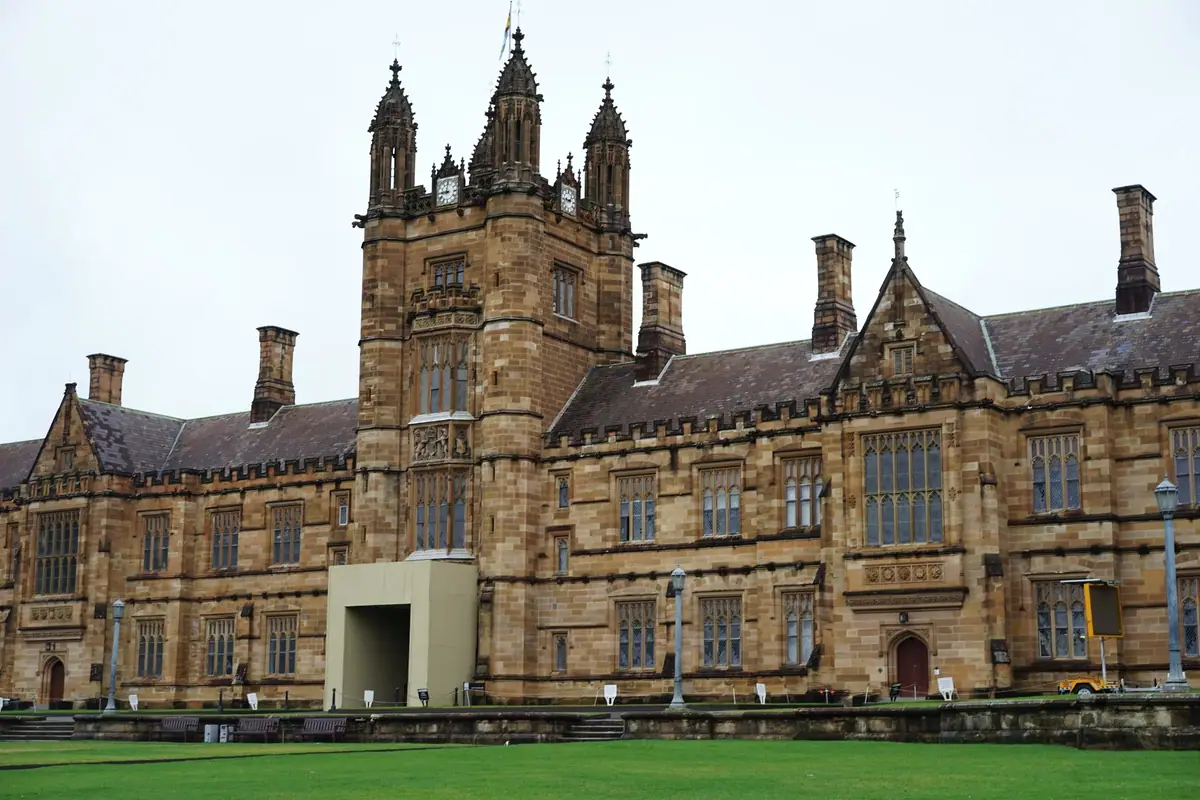
The sandstone Gothic Revival quadrangle of a Sydney university

Ready to ask a question about a student visa?

Add your course and your intake date.